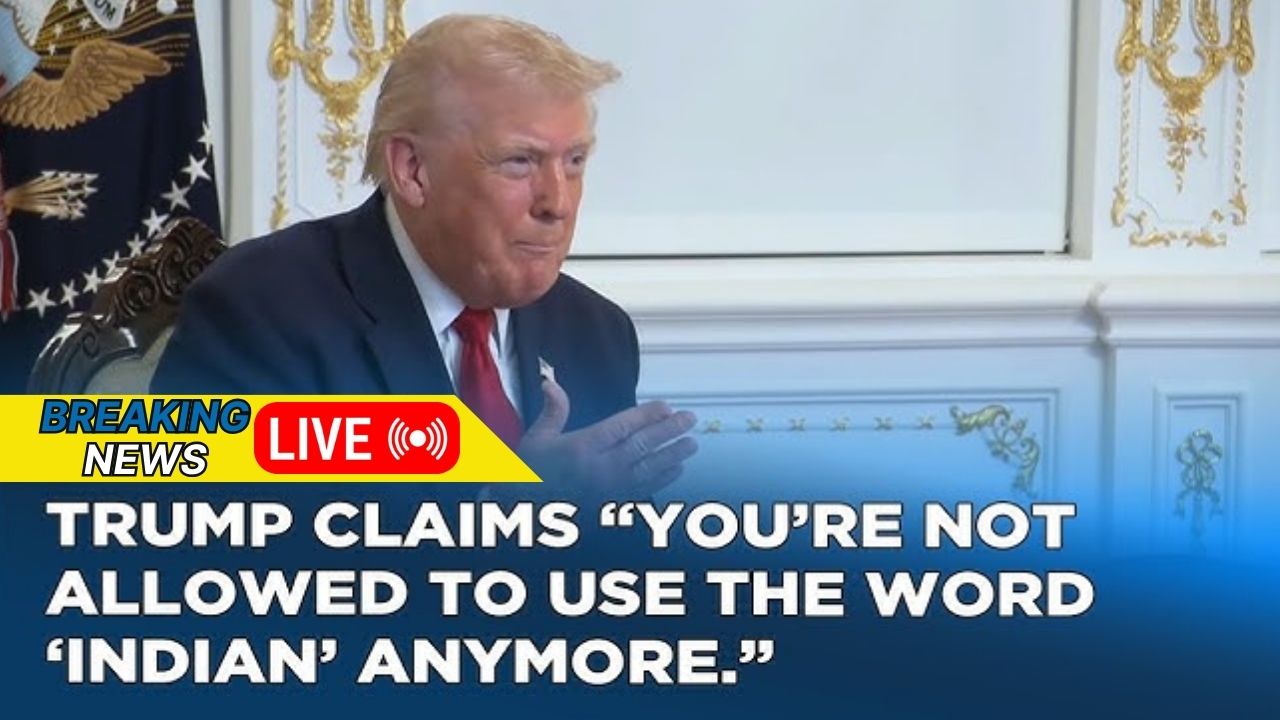
Former United States President Donald Trump has again triggered a wide public and political debate after claiming that the word Indian is no longer allowed in modern usage. His remarks, made while speaking to a reporter, quickly spread across media platforms and reignited long standing discussions about how Indigenous communities in the United States should be identified and represented.
Trump stated that people are not permitted to use the word Indian anymore and went on to claim that the only ones who still want the term used are Indians themselves. He added that he would never instruct people to change their choice of words. While brief in length, the comments carried deep historical, cultural, and political implications that drew strong reactions from Native American groups, activists, historians, and political observers.
What Exactly Did Donald Trump Say
Speaking informally to a reporter, Trump claimed that the word Indian is no longer permissible to use. He stated that people are not allowed to use the term anymore and added that the only individuals who support its use are Indians themselves. Trump framed his comment as resistance to what he described as forced language changes, positioning himself as someone unwilling to dictate how Indigenous people should describe themselves.
Although Trump did not reference any specific law or regulation banning the word, his remarks suggested a broader critique of political correctness and language sensitivity in the United States. The statement quickly gained attention given his past record of controversial language around race, ethnicity, and Indigenous issues.
Short Summary
Topic |
Details |
|---|---|
Main Statement |
Trump claimed the word Indian is no longer allowed |
Affected Communities |
Native American and Indigenous peoples |
Historic Context |
Term originated from Columbus error |
Related Disputes |
Sports team names and Indigenous identity |
Official Reference |
Understanding the Term Indian and Its Origins
The word Indian has historically been used to describe Native American communities. Its origin dates back to explorer Christopher Columbus, who mistakenly believed he had reached India when he arrived in the Americas. As a result, Indigenous peoples were incorrectly labeled Indians, a term that persisted for centuries.
Today, opinions on the term vary widely within Indigenous communities. Some tribal members and organizations continue to use the word Indian as a form of identity and historical continuity. Others argue that the term is inaccurate, outdated, and rooted in colonial misunderstanding. Many prefer alternatives such as Native American, Indigenous peoples, or specific tribal names that better reflect cultural and historical realities.
Trump’s Long History With Native American Issues
Trump has had an uneasy and often confrontational relationship with Native American tribes for decades. While he has sometimes portrayed himself as a defender of Indigenous interests, his record includes repeated disputes that have drawn criticism.
In 1993, Trump testified before Congress against Native American gaming operations. During that testimony, he questioned the authenticity of certain tribal identities, stating that some people claiming tribal status did not look like Indians to him. He also suggested that he might have more Indian blood than some tribal casino operators. These remarks were widely condemned at the time and continue to be cited as examples of dismissive and offensive attitudes.
Sports Team Names and Cultural Representation
Trump’s recent comments also connect to his strong opinions on Indigenous themed sports team names. Earlier this year, multiple organizations condemned his threat to block approval for a new stadium in Washington unless the local National Football League team reverted to its former name, the Washington Redskins. The name was officially retired in 2020 after years of complaints that it functioned as a racial slur.
Trump argued that restoring the old name would increase the team’s value and excite fans. He expressed similar views about the Cleveland Guardians, previously known as the Indians, claiming that Indian people wanted the older name restored.
Several Native American organizations rejected these claims. Association on American Indian Affairs stated that such mascots and names reduce Indigenous people to caricatures and ignore the fact that Native cultures are living and evolving. The group emphasized that Indigenous identities are not entertainment brands or relics of the past.
Divided Reactions Within Indigenous Communities
While many Indigenous organizations oppose the continued use of Native themed mascots and names, some groups support Trump’s position. The Native American Guardians Association publicly stated alignment with Trump, arguing that returning to traditional names represents common sense rather than disrespect.
This divide highlights the complexity within Indigenous communities themselves. Native Americans are not a monolithic group, and opinions on language, symbolism, and representation vary significantly depending on tribe, region, and personal experience.
Indigenous Peoples Day and Columbus Day Tensions
The controversy also sits within a broader cultural debate over Columbus Day and Indigenous Peoples Day. Trump has consistently opposed Indigenous Peoples Day, arguing that it undermines the legacy of Christopher Columbus and traditional American symbols.
In contrast, Native American activists and many local governments support Indigenous Peoples Day as a way to recognize Indigenous contributions, acknowledge historical atrocities, and promote tribal sovereignty. The debate intensified in recent years as statues of Columbus were removed or toppled during nationwide protests.
Past Controversies Involving Indigenous Identity
Trump’s history includes several additional controversies related to Indigenous identity. During his 2016 campaign, he repeatedly referred to Senator Elizabeth Warren as Pocahontas, mocking her claims of Native American ancestry. Warren later released a DNA test indicating distant Native ancestry and challenged Trump to donate one million dollars to a Native organization, which he declined.
Trump has also made controversial remarks about accents and comprehension during international press conferences, including comments directed at an Indian journalist, reinforcing criticism that his language often targets identity differences.
Why the Debate Matters Today
Language plays a powerful role in shaping identity, respect, and historical understanding. Trump’s remarks come at a time when societies around the world are reassessing how marginalized communities are described and remembered. For Indigenous peoples, these discussions are tied to centuries of displacement, misrepresentation, and struggle for recognition.
Whether intentional or not, such statements influence public discourse and policy debates. They also highlight the ongoing tension between tradition and reform in how nations deal with their histories.
Frequently Asked Questions
Q. Did Donald Trump say the word Indian is legally banned
A. No legal ban exists. Trump expressed a personal view rather than citing any official prohibition.
Q. Why do some Native Americans reject the term Indian
A. Many consider it historically inaccurate and rooted in colonial error, preferring Indigenous or tribal specific identifiers.
Q. Why does Trump oppose Indigenous Peoples Day
A. He believes it diminishes the legacy of Columbus and traditional American symbols.
Q. What is the controversy around sports team names
A. Many Indigenous groups argue such names and mascots promote stereotypes and reduce living cultures to branding.
Q. Do Indigenous communities agree on these issues
A. No, opinions vary widely across tribes and organizations, reflecting diverse experiences and perspectives.
For More Information Click HERE